








NEW ORLEANS, LA — In a milestone that signals both a shift in the local economic landscape and a resurgence of community-focused finance, Nola Bank has officially opened its doors for business. As the first de novo—a brand-new, independent bank—to launch in the New Orleans market in 16 years, the institution represents a rare success story in an era defined by consolidation and the dominance of regional and national financial giants.
Following final regulatory approval on September 11, the bank commenced operations on September 14. Its arrival is more than just a new storefront; it is a direct challenge to the centralized, impersonal banking models that have come to characterize the post-Katrina New Orleans financial sector.
The Evolution of the New Orleans Banking Climate
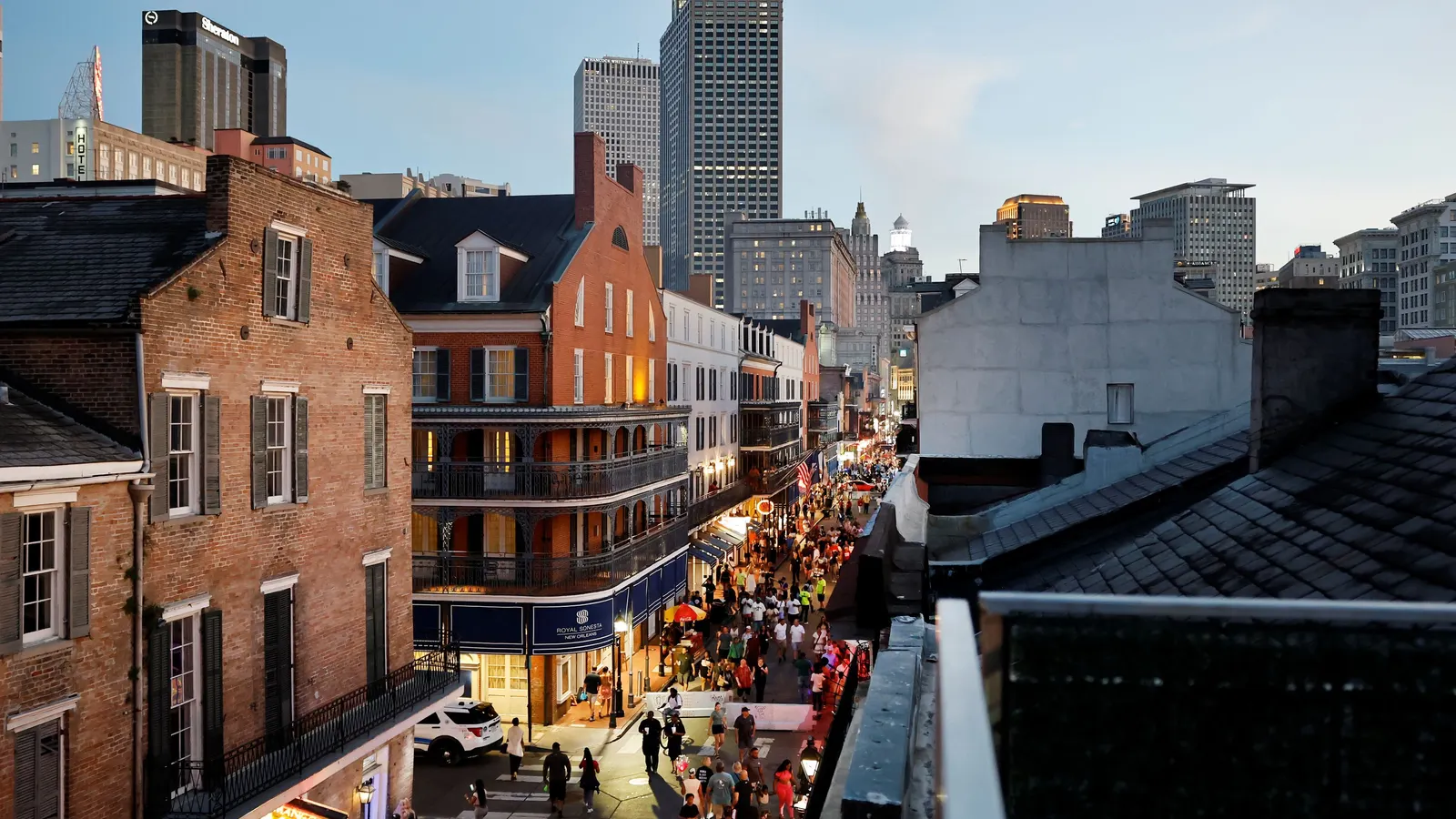
For over a decade and a half, the story of New Orleans banking has been one of disappearance. The devastating impact of Hurricane Katrina in 2005 did more than destroy physical infrastructure; it altered the DNA of the city’s business climate. As residents relocated and the population shifted, the local banking sector became a prime target for acquisition.
CEO Joe Omner, reflecting on the long road to launch, invoked a poignant local saying: "Ain’t dere no more."
"Not just banks, but across the footprint of businesses, there’s been consolidation," Omner said in an interview. "Regionals have come in here and just gobbled up the community banks."
This consolidation has left a void in personalized, relationship-driven banking. Data from the Federal Deposit Insurance Corporation (FDIC) from June 2026 highlights the extent of this shift. Capital One, which famously acquired the New Orleans-based Hibernia National Bank in 2005, currently commands the largest deposit market share in the city at approximately 35%. They are followed by Hancock Whitney Bank and JPMorgan Chase, each holding roughly 21%. Smaller institutions, such as First Horizon Bank and the local Gulf Coast Bank and Trust Company, hold significantly smaller slices of the market at 8% and 4%, respectively.
A Challenging Path to Capitalization
The journey to opening Nola Bank was fraught with hurdles that had stalled similar efforts for years. According to Omner, many groups had attempted to organize a new bank in the region, only to be turned away by the difficulty of raising capital.
"That was one of the major driving forces in banks not being able to find the capital," Omner explained. The uncertainty following natural disasters made investors wary of the New Orleans market, viewing it as a high-risk environment for a startup lender.
Nola Bank’s success in raising $29.2 million in capital is a testament to the investor confidence in their specific, community-centric mission. "We were so fortunate that we were able to find investors that believe in our mission, that are interested in serving the communities that we’re going to serve," said Omner.
Structural Foundations and Leadership
Nola Bank is a state-chartered institution designed from the ground up to address the needs of an underbanked population. The bank’s board is chaired by Henry L. Coaxum Jr., and the institution boasts a diverse shareholder base that mirrors the community it serves.
According to Chief Banking Officer Chris Shah, the ownership structure is uniquely tied to the local economy. "About 40 of the bank’s 78 investors are entrepreneurs or own their own companies," Shah noted. This ensures that the bank’s leadership and its primary stakeholders are deeply invested in the success of the very businesses the bank intends to serve.
The bank is currently in the process of applying to become a Minority Depository Institution (MDI) with a multiracial designation. The FDIC has been supportive of this move, even encouraging the lender to pursue the status. This designation is not merely symbolic; it provides tangible benefits. For instance, other lenders can receive Community Reinvestment Act (CRA) credit for doing business with Nola Bank. Furthermore, MDI status will allow the bank to qualify for federal programs aimed at providing financial literacy education and other vital services to the underserved neighborhoods of New Orleans.
The Philosophy of the "Speedboat"
At the core of Nola Bank’s business model is a commitment to local decision-making—a stark contrast to the centralized underwriting processes of the national banks that dominate the area.
"The small business community prefers to work with a smaller institution like ours because they know they’ll get better service, they’ll get local decision-making," said Shah. "We can sit down and understand the need of that borrower and try and help them."
Shah criticized the rigid, impersonal nature of larger institutions, where loan decisions are often made by committees in different states. "At bigger banks, most of their underwriting and decision-making is centralized. So when you’re sitting down with the bank personnel, they are generally just taking your information, but the decision is being made by somebody that’s never actually met the client."
CEO Joe Omner offers a vivid analogy for this difference: "Big banks are like barges—it takes them miles to turn around. Nola Bank is a speedboat."
This agility is central to their strategy. In a fast-moving economy, the ability to pivot, understand local nuances, and approve financing based on real-world relationships rather than just algorithmic data is, according to the bank’s leadership, their greatest competitive advantage.
Technology: Leveling the Playing Field
While Nola Bank emphasizes traditional relationship banking, it is fully cognizant of the digital demands of the modern consumer. To remain competitive with the regional and national players, the bank has partnered with Jack Henry & Associates to handle its technology infrastructure.
"It’s crucial for Nola Bank to have products, services, and a web presence on par with bigger banks to serve customers in the desired way," Shah said.
Contrary to the belief that community banks are technologically behind, Omner insists that the gap has closed. "Community banks can compete now because technology is going so far, and we have the same capabilities, if not more, than some regionals," he noted. By leveraging top-tier tech partners, Nola Bank aims to provide the sophisticated digital tools of a big bank with the personalized touch of a local neighborhood institution.
Regulatory Outlook and Future Growth
The regulatory environment for de novo banks has been notoriously difficult for years, but there are signs of change. Omner expressed optimism regarding the FDIC’s recent efforts to streamline the de novo application process.
"Regulators really see the need for additional bank charters," Omner said. While Nola Bank is currently under a strict regulatory agreement—including a requirement to maintain a Tier 1 leverage ratio of at least 8% for the first three years of operation—the leadership team views the relationship with regulators as a partnership. Despite the "difficult" nature of the application process, Omner noted that both the FDIC and the Louisiana Office of Financial Institutions were "in our corner."
Implications for the New Orleans Economy
The successful launch of Nola Bank carries significant implications for the region. As the city continues to navigate the complexities of post-disaster economic recovery, the presence of a bank dedicated to the underbanked and to local entrepreneurs could prove to be a catalyst for growth.
By focusing on the small business community, Nola Bank is betting on the idea that the heart of New Orleans’ future lies in its independent businesses. The mission is clear: to serve those who have been left behind by the wave of consolidation, and to prove that a community bank can be both technologically advanced and deeply rooted in its local environment.
As the bank settles into its new operations, the eyes of the financial industry will be on New Orleans. If Nola Bank can succeed where others have failed, it may provide a roadmap for other communities looking to reclaim their financial independence from the grip of national consolidation. For now, the "speedboat" is in the water, and its crew is ready to navigate the currents of the Crescent City.