








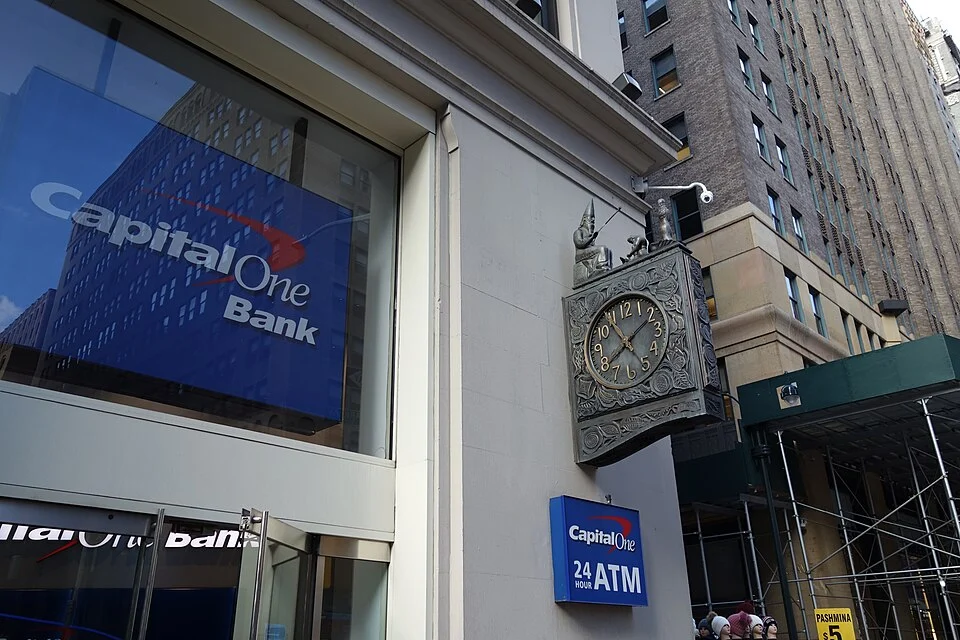
WASHINGTON — November 18, 2026 — In a move that has sent shockwaves through the consumer advocacy community, Capital One has begun notifying its retail banking customers of sweeping changes to its account agreements. The updated terms, which affect both checking and savings accounts, introduce a mandatory forced arbitration clause and a class action waiver. This strategic shift effectively strips millions of customers of their right to access the court system, forcing them into private, closed-door dispute resolution processes that critics argue are fundamentally skewed in favor of the banking giant.
The announcement has triggered immediate pushback from legal experts and consumer protection organizations, who are urging customers to take swift action to opt out of these provisions or consider moving their capital to institutions that maintain traditional access to the judiciary.
The New Reality of Banking: Understanding the Arbitration Clause
The core of the controversy lies in the "fine print" updates Capital One is currently distributing. By embedding a forced arbitration clause into the service agreement, the bank is mandating that any future legal disputes—whether related to erroneous fees, account mismanagement, or systemic fraud—be settled by an arbitrator rather than a judge or jury.
Crucially, the agreement also includes a "class action waiver." This provision prevents customers from joining together in collective legal action. In the financial sector, where individual losses from systemic issues—such as a small, unauthorized fee applied to millions of accounts—might be negligible for one person, the class action model is the primary tool for holding banks accountable. By barring these collective lawsuits, critics contend that Capital One is effectively shielding itself from the financial and reputational risks associated with large-scale corporate malfeasance.
Why Arbitration is Viewed as a "Rigged" System
The National Consumer Law Center (NCLC) and other watchdog groups have long characterized forced arbitration as a "shadow court." Unlike public litigation, arbitration is generally private. Records are often sealed, and the legal precedents established in public courts do not apply.
Furthermore, a significant power imbalance exists: corporations are "repeat players" in the arbitration ecosystem. They provide a steady stream of business to arbitration firms, creating a structural incentive for arbitrators to rule in ways that appease the institutional client to ensure future employment. Research consistently shows that consumers are far less likely to win in arbitration compared to court, and when they do win, the financial recoveries are often significantly lower.
Chronology of the Policy Shift
While the notices arrived in customer inboxes and mailboxes on November 18, 2026, the strategy behind this shift is the culmination of a broader trend among major financial institutions to insulate themselves from litigation.
- Pre-2026: Capital One maintained terms that allowed for greater consumer access to the courts, differentiating itself from some of its peers who had long adopted aggressive arbitration clauses.
- Early November 2026: Internal preparations for the updated terms were finalized, aimed at standardizing dispute resolution across the bank’s retail portfolio.
- November 18, 2026: The official notification process began. Customers were alerted that the new terms would take effect unless a formal, written opt-out notice was received by the bank within 30 days.
- Present Day: Consumer advocacy groups are mobilizing to inform the public of the narrow 30-day window, emphasizing the lack of a digital opt-out mechanism as a significant barrier to consumer choice.
The Path to Opting Out: A Manual Burden
Capital One’s new policy provides a narrow 30-day window for customers to reject the arbitration agreement. However, the bank has not provided a digital "one-click" opt-out feature on its website or mobile app. Instead, customers must navigate a cumbersome, manual process that requires sending a physical letter via traditional mail.
To preserve their legal rights, customers must include the following information in a written notice:
- Full Legal Name
- Current Residential Address
- Phone Number
- Relevant Account Number(s)
- A formal statement rejecting the arbitration clause, accompanied by a signature.
Correspondence must be sent to:
Capital One — Arbitration
P.O. Box 85123
Richmond, VA 23285
Consumer advocates note that by making the opt-out process difficult, the bank is likely relying on "inertia"—the tendency of most consumers to ignore long, complex legal documents—to ensure that the vast majority of their customer base is automatically enrolled in the new arbitration framework.
Official Responses and Expert Analysis
The reaction from the legal and advocacy community has been swift and condemnatory. Patrick Crotty, a senior attorney at the National Consumer Law Center, has been a leading voice in advising customers to seek alternatives.
"Capital One must act quickly to remove the new arbitration clause from its banking and savings account contracts," Crotty stated. "If Capital One fails to do right by its customers, account holders should consider transferring to a community bank or credit union that respects their right to have disputes heard in an open courtroom."
Crotty’s assessment emphasizes the systemic nature of the harm. "The forced consumer arbitration system is rigged. It hurts consumers, hides corporate wrongdoing from public view, and shields corporations from public accountability. Capital One should walk back this decision, or expect to lose customers to competitors that respect their customers’ right to seek justice in court."
From the bank’s perspective, proponents of arbitration often argue that it is a faster, more efficient, and less expensive way to resolve disputes for both the institution and the consumer. However, this argument is increasingly being countered by data showing that the "efficiency" of arbitration frequently comes at the cost of fundamental constitutional rights, including the Seventh Amendment right to a trial by jury.
Broader Implications: The Fight for the FAIR Act
The Capital One decision has reinvigorated the legislative push for the Forced Arbitration Injustice Repeal (FAIR) Act. Introduced by Representative Hank Johnson (GA-04) and Senator Richard Blumenthal (D-CT), the legislation seeks to ban mandatory arbitration clauses in consumer, employment, and civil rights contracts.
If passed, the FAIR Act would render Capital One’s new policy moot by federal mandate, restoring the right of consumers to pursue claims in court regardless of fine-print contract language. Proponents of the bill argue that the current landscape represents a "private takeover" of the justice system, where the ability to sue a powerful corporation is increasingly reserved for those with the resources to bypass arbitration clauses or for those who were never subjected to them in the first place.
The Impact on the Banking Industry
The decision by a major player like Capital One to implement these clauses could trigger a "race to the bottom." If the largest banks successfully shield themselves from the court system without losing a significant portion of their customer base, smaller banks may feel pressured to follow suit to reduce their own legal liability profiles.
Conversely, if there is a significant public exodus of customers—often referred to as "switching banks"—it could serve as a powerful signal to the market that consumers value legal protections and are willing to migrate their assets to community banks and credit unions that uphold those rights.
Conclusion: What Should Customers Do?
For the millions of Capital One customers currently navigating these changes, the message from consumer protection experts is clear: do not ignore the notice.
- Review your mail: Look for the "Notice of Changes to Your Customer Agreement" from Capital One.
- Evaluate your options: If preserving your right to join a class action or have a day in court is important, you must adhere to the 30-day deadline.
- Take action: Send the required documentation to the Richmond, VA address provided by the bank. Keep a copy of your letter and consider sending it via certified mail to track its delivery.
- Consider alternatives: Research local credit unions or community banks in your area. These institutions often operate under different governance models and may not impose such restrictive arbitration clauses.
As the 30-day clock ticks down, the situation serves as a stark reminder of the fragile state of consumer protections in the modern financial sector. The outcome of this specific policy change will likely be viewed as a litmus test for corporate accountability and the future of the American consumer’s relationship with the banking industry. Whether the FAIR Act gains enough momentum to curb these practices or whether the "shadow court" becomes the new standard remains one of the most critical issues facing the American public in 2026.