









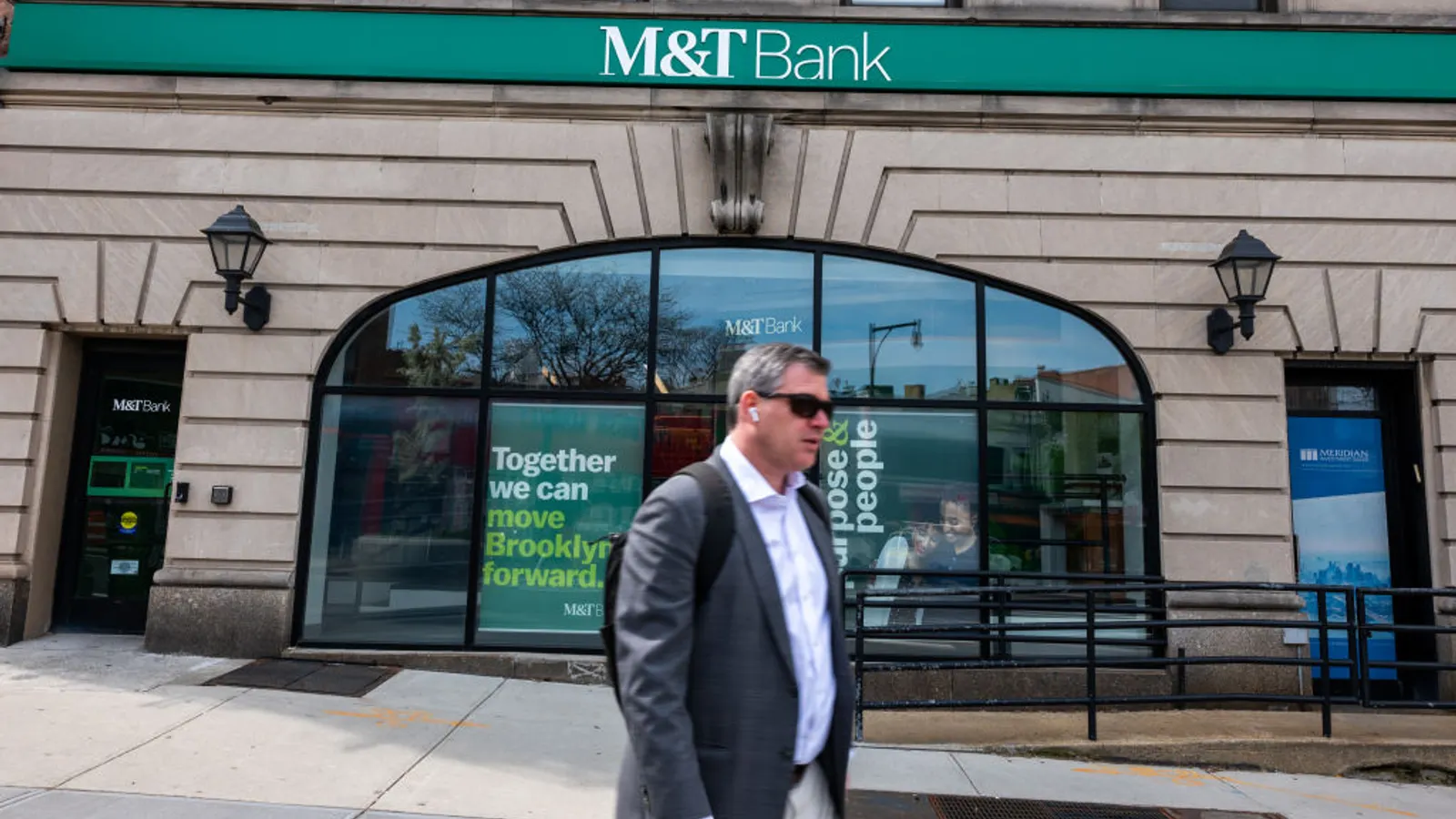
In an increasingly crowded financial services landscape, M&T Bank is recalibrating its credit card offerings to better align with the evolving demands of its customer base. The Buffalo, New York-based regional lender, which holds $218.9 billion in assets, recently announced enhancements to its credit card rewards structure, signaling a strategic shift toward simplicity and value in a market heavily influenced by aggressive fintech competitors and non-bank lenders.
The Core Objective: Strengthening the Banking Relationship
At the heart of M&T Bank’s strategy is a renewed focus on "customer primacy." The bank, which brought its credit card operations in-house in 2010 after years of relying on third-party partnerships, views its credit cards not merely as a standalone product, but as a critical component of a holistic banking relationship.
Chris Nichols, M&T’s head of retail banking, emphasized that the recent updates are a direct response to customer feedback. "One of the things that is core to M&T and our strategy is really focusing on being the primary banking relationship for our customers," Nichols said. "To do that, we have to be able to meet all of their needs, including with a competitive credit card."
By optimizing rewards on everyday spending—specifically grocery and gas purchases—the bank aims to reduce friction for its existing users. The move is designed to ensure that when a customer considers where to turn for their financial needs, M&T remains the first choice.
A Chronology of Strategic Evolution
The journey to the current credit card structure reflects a long-term commitment to self-sufficiency and iterative improvement.
- 2010: The In-House Transition: M&T Bank moved its credit card program in-house, taking direct control over the product lifecycle and customer experience. This decision allowed the bank to integrate credit card services more tightly with its checking and savings accounts.
- The Modern Era (2020–2025): Throughout the early 2020s, M&T maintained a steady, conservative approach to credit cards, offering a streamlined suite of four distinct cards marketed primarily to existing customers.
- November 2026: The Strategic Refresh: Earlier this month, the bank formally updated its M&T Visa® Credit Card rewards program. The enhancement was designed to offer up to 3x points on eligible grocery purchases, a clear pivot toward rewarding the "everyday" spending habits of its clientele.
- Ongoing Integration: Following the rollout, the bank began a multi-channel promotional campaign, utilizing its ATM network, physical branches, and digital banking platforms to educate customers on the new, more intuitive rewards structure.
Supporting Data and Financial Performance
While the bank is tight-lipped about specific growth targets or the exact capital expenditure associated with these enhancements, the financial data provides a glimpse into the scale and stability of M&T’s card portfolio.
Portfolio Metrics at a Glance
- Total Credit Card Commitments: Approximately $6.8 billion.
- Revenue Performance: In the third quarter of 2026, the bank reported $90 million in card revenue, a figure that remained flat year-over-year.
- Deposit Growth: Reflecting the strength of its primary banking strategy, M&T saw a 3% year-over-year increase in deposits, reaching $166.8 billion in the third quarter.
While the revenue remained stagnant, leadership views the current landscape as a phase of "strategic investment." By focusing on retention and deepening relationships, the bank intends to leverage its existing user base rather than engaging in the high-cost customer acquisition wars often seen among national credit card issuers.
Official Perspectives: The "Disruption" Challenge
The credit card industry has undergone a seismic shift in the last decade, driven by the emergence of embedded finance. Fintech companies and retail giants are increasingly offering credit products directly at the point of sale, bypassing traditional banking channels.
"The players are becoming more and more prevalent, and in some cases disruptive," Nichols acknowledged. He noted that the rise of non-bank lenders has necessitated a "leveling up" of M&T’s value proposition.
"If we believe we have a right to get our customers to switch from their current credit card provider to ours, we have to make sure we have that compelling value proposition," Nichols explained. "We know our customers have a lot of options."
For M&T, the competitive advantage is not necessarily in offering the most complex rewards program, but in providing an experience that is simple, reliable, and backed by the trust of a long-standing institution. The bank’s strategy acknowledges that while fintechs may offer high-tech interfaces, regional banks hold the advantage of established, multi-product relationships.
Implications for the Future of Retail Banking
The shift toward simplified rewards suggests that M&T is moving away from the "feature creep" that has plagued some credit card issuers. In an era where consumers are overwhelmed by convoluted points systems and difficult redemption processes, M&T is betting that "simple and easy-to-understand" will win the day.
The Philosophy of "Enduring Experiences"
Nichols’s focus on the "experience" rather than just the "product" is a hallmark of the bank’s broader retail strategy. By viewing every touchpoint—from mobile app navigation to in-branch advisory services—as part of a continuum, the bank hopes to foster long-term loyalty.
"I like experiences because it’s enduring," Nichols stated. "There’s never a finish line, and everybody’s expectation of an experience is slightly different. It forces you to take that step back and say, ‘OK, for customers that want to do small, simple things, are we making it easy for them? If it’s more complex or they need advice, are we making it easy for them to connect into our expertise?’"
The Road Ahead
Moving forward, M&T Bank’s strategy will likely continue to center on:
- Deepening Existing Relationships: Using credit card usage data to better understand customer needs and cross-sell other financial products.
- Digital and Physical Synergy: Ensuring that the rewards experience is consistent whether the customer is standing at a teller window or using the bank’s mobile application.
- Defensive Positioning: Maintaining a robust, no-annual-fee product lineup that prevents customers from feeling the need to "jump ship" to a fintech provider for their daily spending needs.
As the industry continues to evolve, the success of this strategy will be measured not just in card balances, but in the bank’s ability to remain the central financial hub for its customers. By refining its offerings and focusing on the ease of use, M&T is positioning itself to hold its ground against a wave of digital-native competitors.
The bank’s commitment to "continuous improvement" suggests that while these recent updates are a significant step, they are likely just one part of a broader, ongoing effort to stay relevant in a fast-paced, high-stakes market. Whether these changes will be enough to trigger significant growth in card revenue remains to be seen, but for now, M&T is prioritizing the stability of its primary banking relationships as its ultimate competitive hedge.