








The debate surrounding artificial intelligence has long been dominated by a singular, existential anxiety: Will it replace me? Yet, while economists and philosophers argue over the potential for mass displacement, a far more immediate and tangible shift is occurring within the corporate machine. AI has not merely begun to perform work; it has fundamentally vandalized the traditional organizational chart, introducing a lexicon of job titles so complex and rapidly evolving that the labor market is beginning to resemble a sprawling, high-stakes science-fiction novel.
From "Forward-Deployed Agentic AI Architects" to "Vibe Coders," the modern workplace is undergoing a rebranding exercise of massive proportions. This shift offers a vital counterpoint to the prevailing narrative of job loss. While the broader labor market remains stagnant, a small, highly lucrative, and rapidly expanding neighborhood of AI-centric employment is emerging, forcing companies to reconsider not just what their employees do, but how they define their very existence.
The Data Behind the Disruption: A Surge in Demand
The transformation of the job market is not merely anecdotal; it is empirically verifiable. According to recent data from the Indeed Hiring Lab, the number of job postings explicitly mentioning "AI" surged by 134% between February 2020 and the end of 2025. This explosion occurred against a backdrop of wider market lethargy, where total job postings grew by a mere 6% in the same timeframe. By December 2025, AI-related terminology appeared in a record 4.2% of all Indeed job listings.
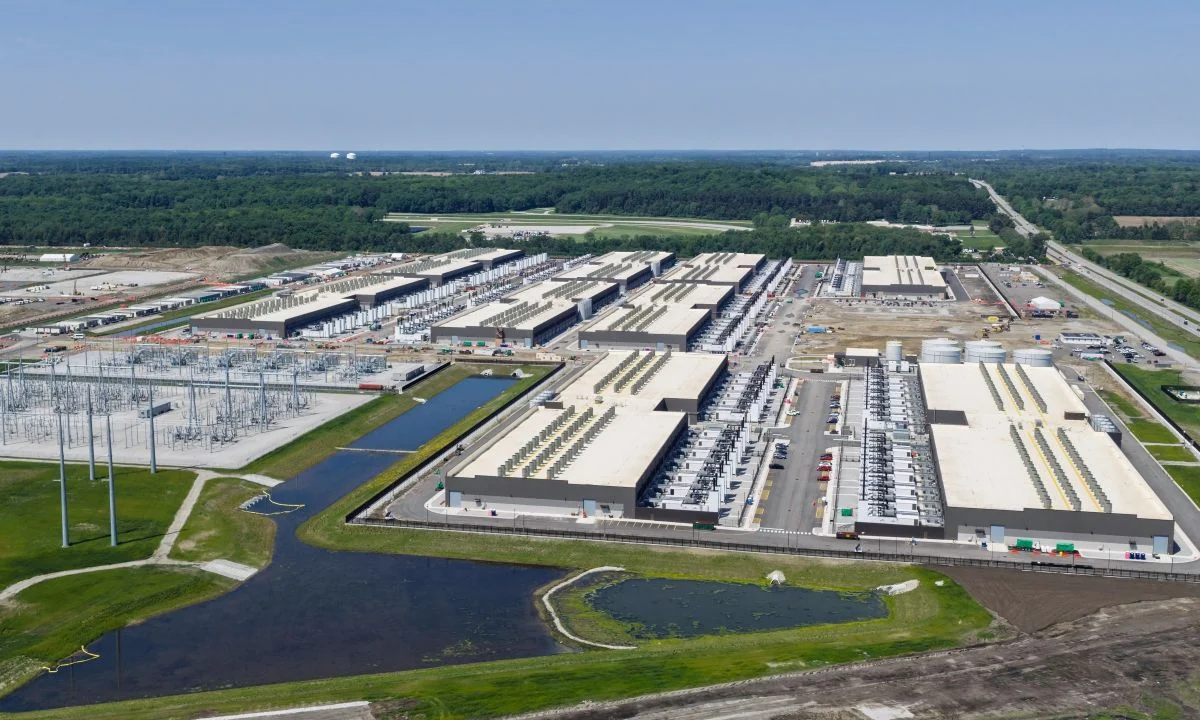
This data reveals a critical truth: AI is not simply changing the nature of labor; it is adding syllables to it. As traditional sectors struggle to find growth, the "AI-enablement" of existing roles has become a strategic imperative. The World Economic Forum estimates that investment in the sector has already supported approximately 1.3 million new positions—spanning everything from specialized AI engineers to the physical infrastructure roles required to power them, such as data center technicians and electrical contractors.
A Chronology of the AI Job Explosion
To understand how we arrived at the current state of "title chaos," one must look at the rapid maturation of the industry over the last three years:
- 2022–2023: The Prompt Engineering Gold Rush. As ChatGPT and other Large Language Models (LLMs) entered the public consciousness, the "Prompt Engineer" emerged as the prototypical AI role. Advertised as a six-figure profession for "chatbot whisperers," it became the shorthand for the initial wave of AI integration.
- 2024: The Infrastructure Build-Out. As enterprises moved from experimenting with interfaces to integrating models into backend systems, the demand shifted toward "AI Engineers" and "Machine Learning Researchers." The focus moved from talking to models to building, fine-tuning, and maintaining them.
- 2025: The Agentic Transition. The current frontier involves "Agentic AI"—systems capable of performing tasks autonomously. This has birthed the era of the "Forward-Deployed Agentic AI Architect," a role focused on embedding AI into the core workflows of corporate clients.
- 2026 and Beyond: The Normalization of the Niche. We have now entered a phase where every department—from Human Resources to Marketing—is carving out its own AI sub-specialty, leading to a proliferation of titles like "Responsible AI Counsel" and "AI Transformation Lead."
Supporting Data: Where the Titles Are Growing
The reach of AI terminology is no longer confined to the traditional corridors of Silicon Valley. Indeed’s analysis shows a significant expansion into non-technical fields. By the end of 2025, roughly 45% of data and analytics postings contained AI-related terminology. Perhaps more surprisingly, 15% of marketing job listings and 9% of human resources postings now explicitly require AI competency.
This cross-sector penetration is evidenced by the raw numbers: the count of frequently advertised job titles explicitly referencing AI rose from 264 in 2022 to 822 in the first quarter of 2026. Crucially, nearly two-thirds of these roles exist outside of the traditional technology sector. This suggests that the "AI-ification" of the workforce is a horizontal trend, affecting how we hire in retail, finance, law, and healthcare.
The Economics of the AI Elite
At the upper echelons of this new labor market, compensation packages have begun to mirror the economics of professional sports. According to a review by Syracuse University, compensation for a Chief AI Officer (CAIO) now routinely falls between $200,000 and $500,000 annually. However, for specialized research engineers and infrastructure experts—those capable of training advanced models or managing inference latency—total compensation packages, including equity and bonuses, can exceed $1.4 million.
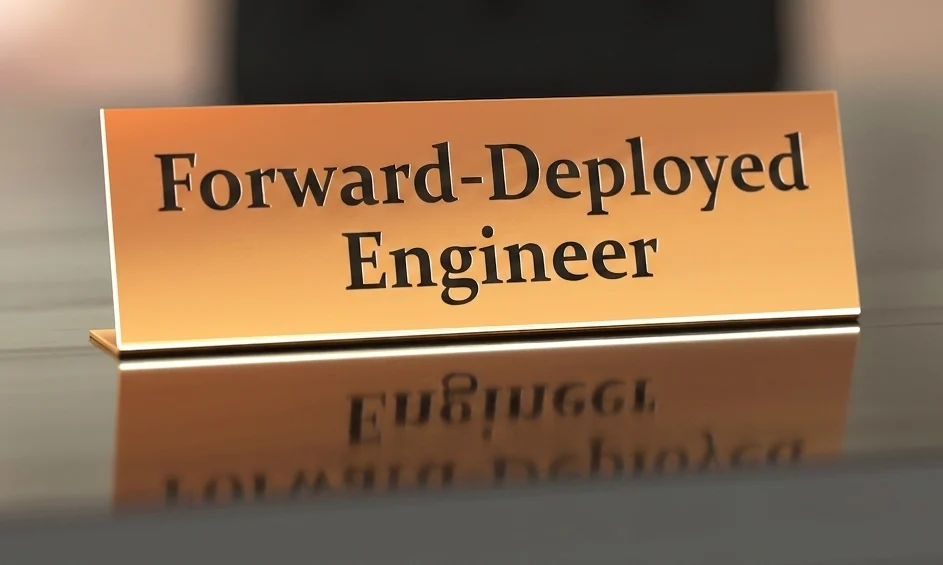
The "Forward-Deployed Engineer," a title popularized by firms like Palantir, has become the most sought-after role for this high-tier demographic. These engineers serve as the bridge between corporate executive ambition and technical reality, translating vague mandates to "do something with AI" into functional, high-performance software. Market guides estimate that the salaries for these "rocket-sled" roles now range from $238,000 to $700,000, signaling a massive premium on professionals who can combine technical prowess with client-facing diplomacy.
The Department of Unnecessary Titles: Is It All Just Marketing?
While genuine technical roles—such as "Evals Engineers" (who test model reliability) and "AI Red Teamers" (who attempt to break systems before hackers do)—address real-world risks, there is a growing consensus that many modern job titles are merely "resumé keyword optimization."
The emergence of roles like "Claude Evangelist" or "Vibe Coder" suggests that companies are struggling to categorize work that is fundamentally different from traditional software development. A "vibe coder," for instance, is often a developer who relies heavily on AI to generate code, requiring a shift from manual syntax creation to high-level supervision and prompt-based iteration. While some view this as the future of software engineering, critics argue it is simply a rebranding of "senior developer" for a generation of programmers who prefer natural language over traditional syntax.
Implications: The Future of the Corporate Org Chart
The implications of this shift are profound. First, the rapid turnover of titles suggests a period of extreme instability in career paths. Professionals who identify as "Prompt Engineers" today may find their role absorbed into general product management tomorrow. Second, the "AI-ification" of non-technical departments creates a dangerous potential for "title inflation," where companies mask stagnant productivity behind the veneer of AI-led transformation.
Most importantly, the division of labor is being rewritten. As companies appoint "Chief Agentic Transformation Evangelists" to oversee the integration of AI, the core function of the human employee is being pushed toward oversight, governance, and the management of "context"—the instructions, data, and tools supplied to models.
Conclusion: A New Era of Corporate Governance
As we look toward the remainder of the decade, the machines will undoubtedly automate specific, repetitive tasks. However, they are simultaneously forcing an evolution in how we view the "human" in human resources. We are entering an era where the most valuable skill may not be the ability to code, but the ability to translate, govern, and audit the AI systems that have now become the central nervous system of the enterprise.
Before the dust settles on the organizational chart, corporate America will likely continue to schedule meetings to define what these new roles actually do. But for now, the message is clear: if you are looking to survive the AI transition, your best bet may be to embrace the alphabet soup of the new labor market—and perhaps keep a close eye on your company’s next internal memo regarding the appointment of a "Principal Agentic GenAI Forward-Deployed Context Architect."
For ongoing analysis of the shifting labor market and the intersection of technology and human capital, subscribe to our daily AI Newsletter.