









As of July 1, 2026, the landscape of graduate and professional education financing in the United States will undergo its most significant transformation in decades. The era of the "unlimited" Grad PLUS loan—which allowed students to borrow up to the total cost of attendance—is coming to a definitive close. In its place, the federal government is implementing strict annual and aggregate caps, fundamentally altering the calculus for prospective and current students alike.
This policy shift, while aimed at curbing runaway tuition costs and ballooning student debt, creates an immediate financial cliff for those pursuing advanced degrees. For the next generation of doctors, lawyers, and researchers, the ability to fund a degree through federal backing is no longer a given; it is a precarious privilege that requires strategic foresight.
The Core Facts: What Changes on July 1, 2026
The new federal regulations replace the flexible Grad PLUS structure with a rigid tiered system. Regardless of the actual cost of tuition, fees, and living expenses, graduate and professional students will be restricted by fixed annual limits.
The New Federal Cap Structure
| Loan Type | Graduate Annual Cap | Professional Annual Cap |
|---|---|---|
| Annual Federal Cap | $20,500 | $50,000 |
| Graduate/Professional Aggregate Cap | $100,000 | $200,000 |
| Combined Lifetime Cap | $257,500 | $257,500 |
Crucially, the government has created a distinct line between "graduate" and "professional" programs. While medicine, dentistry, law, veterinary medicine, and chiropractic programs qualify for the higher $50,000 annual limit, many other high-cost, high-value degrees—such as Physician Assistant (PA), Nurse Practitioner (NP), and Physical Therapy (PT) programs—are currently relegated to the $20,500 annual cap. This discrepancy creates an immediate, severe funding gap for students in essential healthcare fields.
Chronology: The "Grandfather" Window and Enrollment Risks
For current students, the transition period is defined by a "grandfather clause." If a student had a Direct Loan disbursed for their current program prior to July 1, 2026, they may retain access to the legacy Grad PLUS rules for up to three additional academic years.
The "Three-Year Rule"
This window is not guaranteed indefinitely. It is contingent upon continuous enrollment. The Department of Education’s stance is clear: any break in enrollment, including voluntary leaves of absence, withdrawals, or forced breaks, will likely terminate a student’s grandfathered status.
For a second-year student, this means the clock is ticking. If they step away from their program for a semester for medical reasons or family emergencies after July 2026, they may return to find their ability to finance the remainder of their degree through federal loans has evaporated. This "orphan group" of students faces the highest risk, as they may have already committed to a high-cost program under the assumption that federal funding would carry them to the finish line.
Supporting Data: The Rise of the Private Loan Market
With federal caps failing to meet the reality of current tuition rates—which often exceed $80,000–$100,000 annually for top-tier medical and dental programs—a massive, systemic vacuum has been created. This gap will almost certainly be filled by the private student loan market.
Historically, private lenders have focused on undergraduate loans, often requiring parental cosigners. However, professional students represent a different profile: they are high-earning potential, credit-worthy individuals with large, immediate capital needs.
What to Expect from Lenders:
- Volatile Underwriting: Because lenders have not previously priced risk for this specific demographic at this scale, initial interest rates and requirements will be erratic.
- Cosigner Necessity: While graduate students are often independent, the sheer size of the loans required to bridge the federal gap may force many to seek cosigners to secure favorable rates.
- The Importance of Terms: Borrowers should prioritize deferral options (specifically during medical residency) over low base interest rates. A slightly higher rate with generous residency-deferral clauses is mathematically superior to a "cheaper" loan that requires immediate repayment during low-income training years.
Implications: Institutional Shifts and Program Viability
The ripple effects of this policy will not be contained to the student’s bank account; they will inevitably reshape the landscape of American higher education.
1. Pressure on Tuition Models
For years, many universities have relied on the "unlimited" nature of Grad PLUS loans to justify rising tuition. When the government effectively limits the amount of money a student can borrow, the school’s ability to charge whatever it wants is curtailed. Programs that cannot demonstrate a high return on investment (ROI) will face existential pressure to either lower costs or consolidate.
2. The Consolidation of Academic Programs
We should expect a contraction in the number of graduate programs, particularly at mid-tier private institutions. Programs that currently require $60,000+ in annual funding but lead to modest salary outcomes will struggle to attract students who can no longer access the necessary capital. Smaller programs may be absorbed by larger universities, or they may close entirely, as the "easy money" era of graduate school financing ends.
3. Changes in Repayment Strategy
For those entering programs after July 2026, the Repayment Assistance Plan (RAP) will serve as the primary income-driven repayment vehicle. With forgiveness timelines stretched to 30 years for private-sector borrowers, the cost of borrowing has fundamentally changed. A student today must calculate the 30-year cost of a loan, not just the monthly payment upon graduation. The strategy is no longer about "getting the degree"; it is about long-term debt management architecture.
Preparing for the New Reality: A Strategic Roadmap
Whether you are a prospective student or currently enrolled, preparation is the only way to mitigate these risks.
- For Prospective Students: Before applying, conduct a "Gap Analysis." Calculate the total cost of attendance for your target program and subtract the federal caps ($20,500 or $50,000, depending on the degree). If you do not have the liquid assets to cover the difference, you must have a pre-approved private loan strategy or a clear plan to secure institutional scholarships.
- For Current Students: Do not change your enrollment status without extreme caution. If you are in a program that will take longer than three years to complete from the July 2026 cutoff, consult with your financial aid office immediately to understand your "legacy" expiration date.
- The Debt-to-Income Audit: Before taking on new, private-backed debt, run a rigorous projection of your post-graduation income. If your debt-to-income ratio exceeds 2:1, the 30-year repayment path (RAP) may lead to massive interest accrual. In such cases, refinancing or seeking institutional aid is not just a preference—it is a necessity for financial survival.
Frequently Asked Questions (FAQ)
When do the new grad school loan limits take effect?
The caps take effect on July 1, 2026. If you have not taken out a federal loan for your current program by that date, you will be subject to the new, lower caps immediately.
Which degrees count as "professional" for the $50,000 limit?
Currently, this is limited to specific licensed clinical and legal tracks: Physicians (MD/DO), Dentists (DDS/DMD), Lawyers (JD), Veterinarians (DVM), and Chiropractors. Programs such as Physician Assistant, Nurse Practitioner, and Physical Therapy are classified as general graduate studies and are limited to the $20,500 annual cap.
What happens if I take a leave of absence?
Taking a leave of absence or withdrawing after July 2026 effectively resets your "grandfathered" status. Upon returning, you will be subject to the new federal loan caps, which may jeopardize your ability to complete your degree.
How does this affect Public Service Loan Forgiveness (PSLF)?
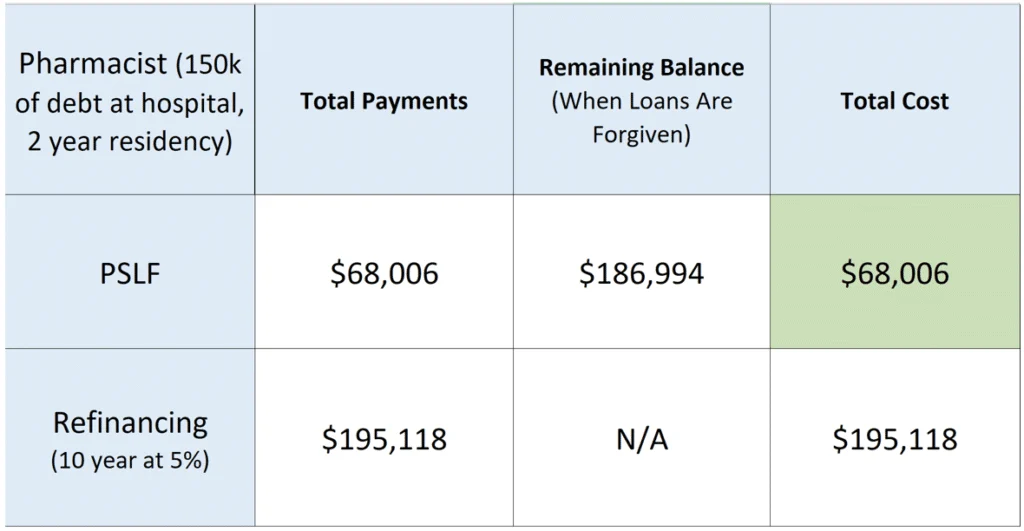
PSLF remains a viable path for those in qualifying roles. If you are entering a field that qualifies for PSLF, the 10-year forgiveness timeline remains significantly more attractive than the 30-year private-sector RAP. Borrowers should prioritize federal loans up to the cap to ensure they maximize the amount of debt that can be forgiven through PSLF.
Is the private loan market ready for this?
The private sector is currently in a state of adjustment. Borrowers should anticipate a "messy" first year where interest rates and lending standards fluctuate wildly as banks and credit unions scramble to build underwriting models for this new, high-demand borrower class. Comparison shopping between at least three lenders is strictly advised.
This article is for informational purposes only and does not constitute formal financial or legal advice. As the 2026 policy implementation approaches, students are encouraged to monitor updates from the Department of Education and consult with financial planners who specialize in high-debt, high-income professions.