








In an era where generative artificial intelligence is rapidly commoditizing information and automating routine tasks, the banking industry faces an existential question: What is the value of a physical branch in a digital-first world? For PNC Financial Services, the answer lies not in software, but in soft skills.
As artificial intelligence begins to dominate the initial phases of customer inquiry—from basic research to automated financial planning—PNC is doubling down on a strategy that prioritizes high-touch, hospitality-driven human interaction. Jeff Martinez, head of branch distribution and sales management at the $627.8 billion-asset institution, believes that the bank’s investment in a "welcoming experience" will serve as its most potent differentiator against the encroachment of silicon-based advisors.
The Strategic Shift: Hospitality as a Competitive Differentiator
PNC’s recent operational philosophy marks a distinct departure from the cost-cutting, branch-slashing trends that defined retail banking for much of the last decade. Instead of viewing branches as legacy liabilities, PNC is treating them as hubs for high-value relationships.
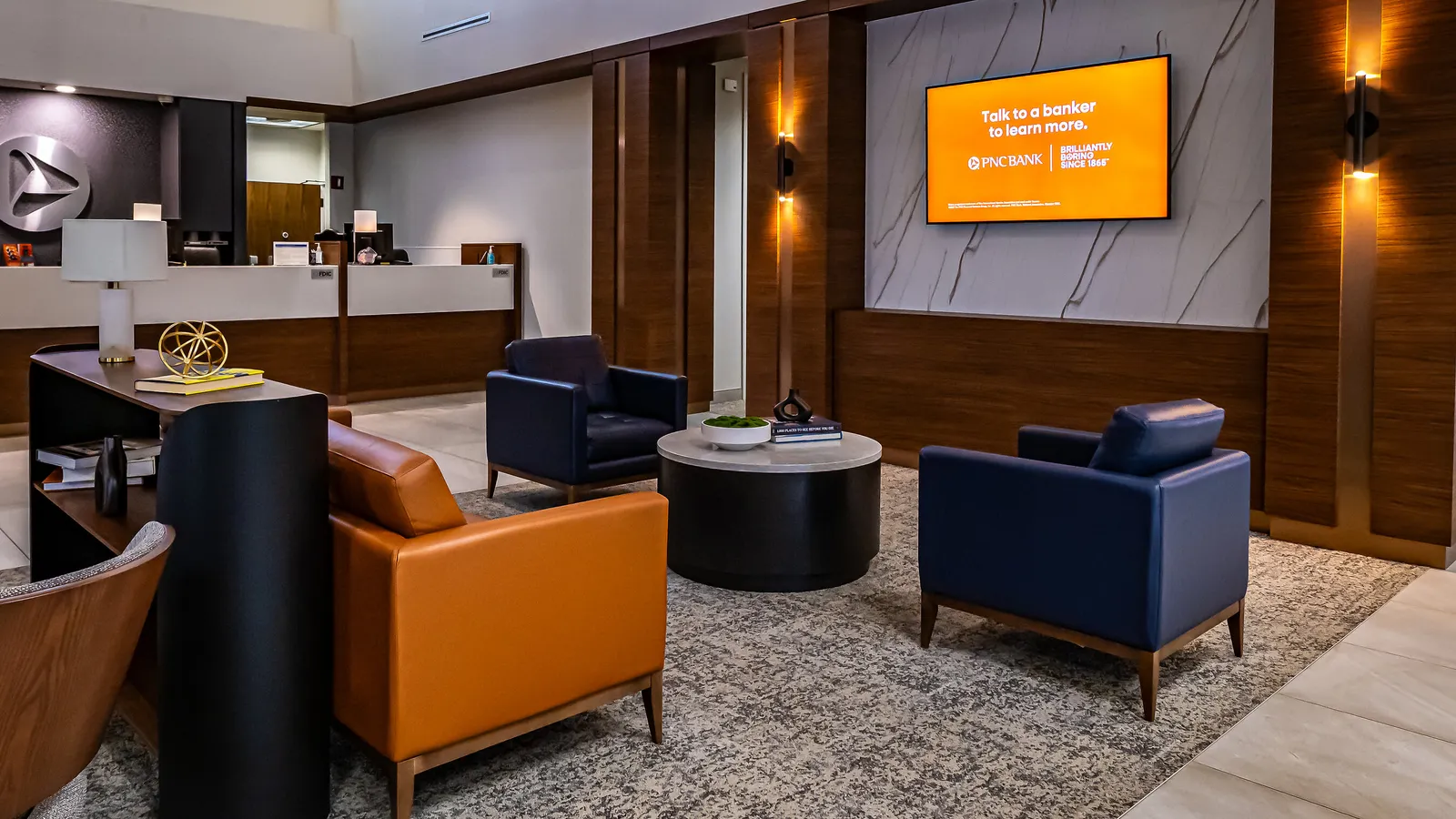
The bank has aggressively recruited staff from the hospitality industry—hiring individuals whose professional DNA is rooted in guest service rather than traditional transactional banking. This is evident in the subtle, human-centric rituals now becoming standard at PNC branches, such as staff walking customers to their cars under umbrellas on rainy days or greeting visitors with a level of warmth typically reserved for luxury hotels.
"The hours we invest in employee training geared toward providing a warm and welcoming experience will be worth 10x a year from now," Martinez stated in a recent interview. He characterizes this approach as an "art form married with science," arguing that as AI-generated advice becomes ubiquitous, the human touchpoint will transition from a standard service to a premium commodity.
The Human Moat Against Disintermediation
The rise of large language models (LLMs) and AI agents presents a significant threat to traditional banking models. Udi Ziv, CEO of the fintech firm Personetics, has warned that AI agents could effectively "disintermediate" banks, reducing them to an invisible utility where the customer’s primary relationship is with a chatbot rather than a financial institution.
For banks, this risks a loss of loyalty and a commoditization of their brand. To combat this, industry leaders are increasingly positioning "humanity" as their primary defense. When customers utilize AI to research complex financial products—such as mortgages or retirement portfolios—Martinez argues they will inevitably seek human validation.
"Customers will want to connect with bank employees during consequential moments in their financial lives, even if it’s just to reinforce what they already heard from a large language model," Martinez said. In this context, the bank employee becomes a curator of information and a source of emotional security, a role that algorithms cannot replicate.
This trend is not unique to PNC. Industry peers are following suit. JPMorgan Chase has been running high-profile billboard campaigns in markets like Charlotte, North Carolina, with the punchy tagline: "Money questions. Human answers." Similarly, the Canadian lender TD Bank launched a marketing campaign earlier this year titled "More Human," underscoring the industry-wide recognition that the personal touch is the ultimate moat against the "invisible utility" threat.
Chronology of Expansion: Building a National Footprint
PNC’s commitment to the branch model is not merely ideological; it is backed by a massive, multi-year capital expenditure program. The bank is currently executing one of the most aggressive physical expansion strategies in the U.S. banking sector.
- 2019: PNC began a measured expansion in Miami, starting with a single branch to test the market’s appetite for its high-touch service model.
- Early 2024: The bank solidified its plans to reach 50 branches in the Miami market by the end of 2028, citing the success of its relationship-based approach.
- November 2026: At the BancAnalysts Association of Boston conference, CEO Bill Demchak publicly articulated the urgency of the expansion, noting that the window to secure market share is closing.
- Present Day: PNC has announced the addition of approximately 53 new locations across eight markets in South Carolina and Georgia, alongside an additional 10 locations spread across Texas, Florida, and North Carolina.
The bank currently operates roughly 2,400 branches and has set a target of opening approximately 370 new locations by 2031. This growth strategy is focused on "ultra-light" expansion in markets where the bank already has some brand recognition or existing institutional footprints. By building on its presence in the Southeast, Southwest, and Chicago, PNC is creating a network effect that leverages existing ties with local developers and regional economies.
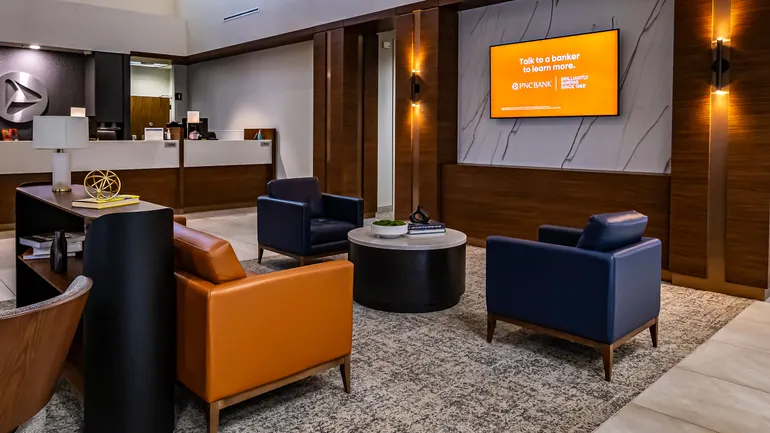
The "Musical Chairs" of Retail Banking
During the BancAnalysts Association conference, CEO Bill Demchak offered a blunt assessment of the industry’s current state. "When the music stops, you have to have critical share if you want to be a real retail player in the country," he remarked.
Demchak views the current competitive landscape as a game of musical chairs where only a handful of banks truly understand the stakes. "We’ve got to do this today because the game is going to end," he noted. "I think there’s only four or five players that even realize a game is going on, and we’ve got to be a winner that comes out of the back end of that."
Martinez, tasked with executing this strategy, is focused on ensuring that when the metaphorical music stops, "PNC not only has a chair but has a very favorable one." He notes that he welcomes the increased competition, as it validates his hypothesis. As major rivals like JPMorgan Chase and Bank of America also scramble to bolster their physical presence, Martinez believes it will create a clear distinction in the market between "those that are doing it right and those that are just doing it."
Supporting Data and Regional Strategy
PNC’s expansion is rooted in a data-driven understanding of "hyper-local" influence. Martinez emphasized that hiring staff who are known within their communities is essential to the brand’s success. When a familiar face in the neighborhood becomes the representative of a major financial institution, it creates an immediate bridge of trust that digital-only banks cannot easily replicate.
The strategy also focuses on markets that are currently seeing significant economic tailwinds. In competitive states like Texas, for instance, the ability to build on existing relationships with local developers allows PNC to gain a foothold that would be prohibitively expensive to build through marketing alone. While Martinez declined to name other target markets, he highlighted Kansas City and Boston—two cities where the bank currently maintains a small, strategic presence—as potential areas for future growth.
The Future: 2027 and Beyond
Looking ahead, Martinez is confident that the convergence of technology and human service will only deepen. By 2030, he predicts that the market will see a clear bifurcation: customers who prioritize convenience will utilize AI, but those seeking guidance for life-altering financial decisions will actively seek out the "human channel."
This forecast is supported by the changing nature of the branch visit. As customers visit physical locations less frequently for routine transactions, the nature of the interaction is shifting toward advisory services. This means that when a customer does walk through the doors, the encounter is almost certainly high-stakes.
For PNC, the goal is to ensure that these rare, high-value interactions are executed with a level of hospitality that creates a lasting emotional bond. As Martinez stated, the combination of high-tech research and high-touch guidance is an "art form" that will hold significantly more value in 2027 than it does today.
Implications for the Industry
The implications of PNC’s strategy extend far beyond its own balance sheet. If the "hospitality-first" model succeeds in driving deposit growth and customer loyalty, it could force a fundamental rethink of branch design across the entire U.S. banking industry.
For years, the industry narrative has been that digital transformation equates to the elimination of the human element. PNC’s bold, counter-intuitive bet suggests that in an age of artificial intelligence, the most advanced competitive advantage a bank can have is the ability to offer a truly human experience.
As the industry observes this "rabbit hole" of physical expansion, the ultimate test will be whether the cost of human-centric staffing can be reconciled with the long-term profitability of retail banking. If Martinez is correct, the future of finance won’t be found solely in the cloud; it will be found in the warmth of a local branch, the expertise of a trusted banker, and the quiet confidence of a customer who feels truly seen and served.